ΔE (500h QUV)< 0.8 (ASTM D2244)
Gloss retention> 92% @ 60°
Cure impactNo change (60 min @ 60 °C)
Cost impactNeutral (-1.6%/kg vs. legacy)
Customer
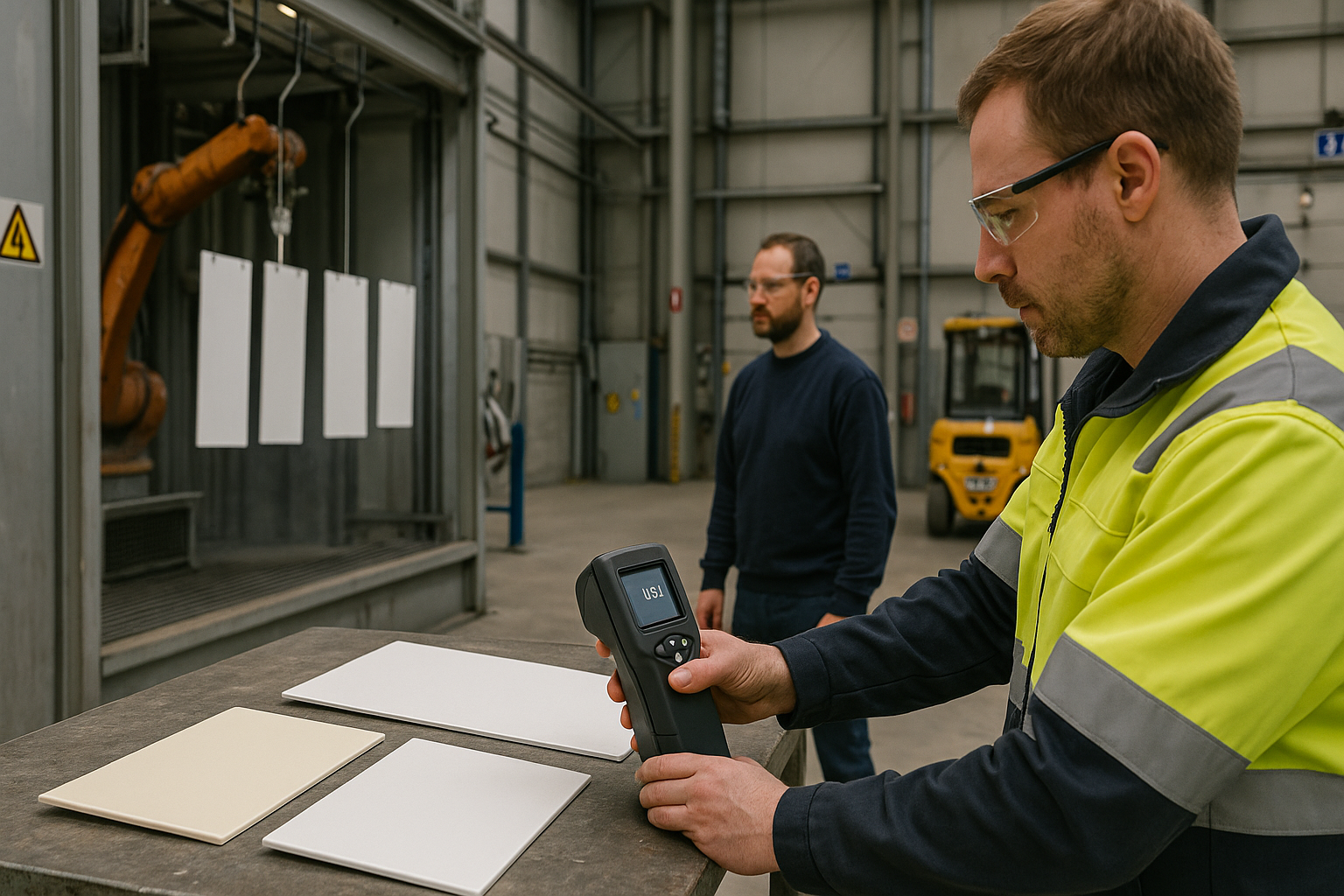
OEM metal fabricator producing color-critical machinery panels. Yellowing after outdoor exposure caused warranty returns and rework.
Challenge
- Visible b* drift after accelerated weathering (ΔE 1.6–2.1 @ 500h QUV-A).
- Legacy hindered phenol + phosphite package inconsistent between batches.
- No tolerance for pot life or cure time penalties on the line.
Approach
Benchmarked antioxidant packages in the customer’s resin/pigment system (aliphatic polyisocyanate / acrylic polyol, TiO₂-rich). A synergistic pair of AO-1010 with AO-168 delivered the most stable color hold.
Formulation window
| Component | Function | Use level (on solids) | Notes |
|---|---|---|---|
| AO-1010 | Primary antioxidant | 0.15–0.25% | High MW; minimal volatility; hydrolytic stability. |
| AO-168 | Processing phosphite | 0.10–0.20% | Protects during processing; regenerates phenolic AO. |
| UV absorber (optional) | UV screen | 0.5–1.0% | For outdoor gloss on vivid shades; HALS optional. |
Processing & testing
- AO-168 to polyol during let-down; AO-1010 post-mix 45 °C until dissolved.
- Applied 50–60 µm DFT; cured 60 min @ 60 °C.
- Weathering: QUV-A 340 nm, 8 h UV / 4 h condense cycles to 500 h.
- Color ΔE (ASTM D2244); gloss 60° (ASTM D523); yellowness index (ASTM E313).
Results
AO-1010/168 reduced yellowing ~60–65% and tightened lot variability versus the incumbent. No measurable change in pot life, cure, adhesion, or hardness. Field panels at 3 months matched the lab trend.
Regulatory: Grades supplied with full
SDS &
COA, EU REACH
registered; GHS labels provided. Food-contact suitability depends
on the final article and jurisdiction—request the regulatory
dossier if needed.